
Behind every successful business are individuals whose knowledge, leadership, or expertise plays a crucial role in its growth. It could be the founder, a senior executive, a lead salesperson, or a specialist with unique skills. If one of these key individuals is suddenly unable to work due to death or a covered critical illness, the business may face significant financial and operational challenges.
Key Takeaways
- Protects your business from the financial impact of losing a key employee.
- Maintains business continuity during unexpected leadership or talent loss.
- Covers critical expenses like recruitment, training, and loan repayments.
- Strengthens financial stability and builds confidence among stakeholders.
Key Person Insurance provides financial support that can reduce the impact of losing an essential team member, allowing the company to continue operating while it adjusts to the change.
What Is Key Person Insurance?
‘Key Person Insurance’ also known as ‘Key Man Insurance’ is a type of life insurance where an organization insures the life of its most vital employee or business owner. Typically, this coverage applies to individuals whose skills, leadership, or decision-making significantly impact the organization’s operations and revenue. The organization itself owns the policy, pays the premiums, and receives the insurance payout if the need arises.

If the insured individual passes away or a specific covered event occurs during the policy term, the insurance company pays a stipulated amount to the organization. These funds help mitigate financial losses, maintain day-to-day operations, and cover critical expenses such as recruiting and training a suitable replacement. These funds can help the company manage financial obligations, maintain operations, and recover from the loss.
Also Read:Long-Term Care Planning
Unlike personal life insurance, which is designed to protect family members, Key Person Insurance focuses on protecting the financial stability of a business.
Who Is Considered a Key Person?
A key person is anyone whose absence could have a major impact on the company’s performance or profitability. This may include:
- Business owner or founder
- Chief Executive Officer (CEO)
- Managing Director
- Business partner
- Top-performing sales professional
- Technical or product specialist
- Research and development expert
- Employee responsible for major client relationships
If the loss of an individual would significantly affect business operations, revenue, or customer confidence, that person may be considered a key employee.
How Does Key Person Insurance Work?
The process is simple and designed to provide financial security when it is needed most.
- The business identifies an employee or owner whose role is critical.
- A Key Person Insurance policy is purchased in that individual’s name.
- The company pays the insurance premiums.
- If the insured person dies or experiences a covered event, the insurer pays the benefit to the business.
- The business uses the payout to manage expenses, maintain operations, and recover from the financial impact.
Why Is Key Person Insurance Important?
Losing a key employee can interrupt business operations, reduce income, and create uncertainty for employees, clients, and investors. The sudden loss of a key employee or business owner can pose significant challenges to an organization’s financial stability and daily operations. In such situations, ‘Key Person Insurance’ serves as a vital financial safeguard for the business. It helps alleviate the sudden financial strain on the organization and provides the necessary time and financial support to keep business operations running smoothly.
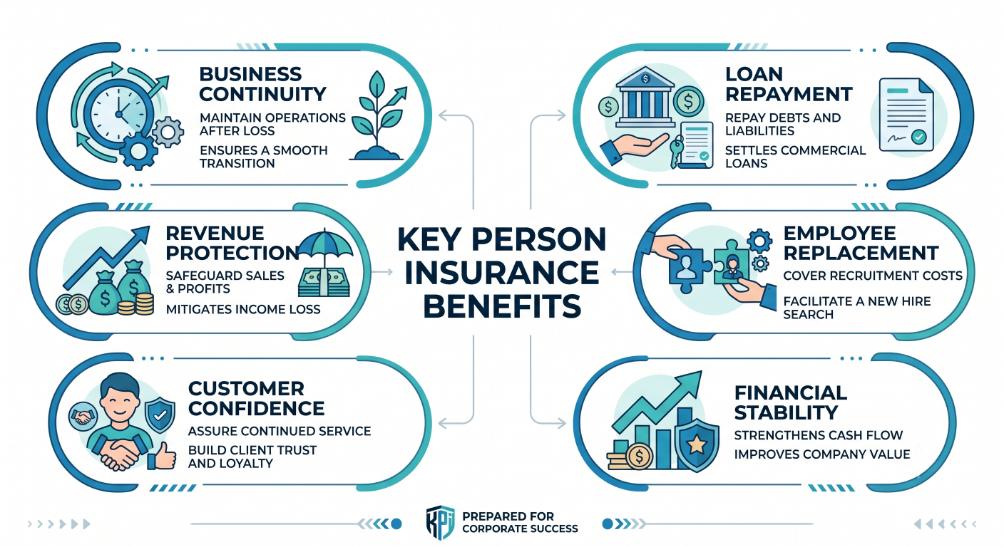
Key benefits of this insurance include:
- Helps compensate for temporary loss of business income.
- Supports uninterrupted business operations during the transition.
- Covers the costs of recruiting, hiring, and training a replacement.
- Assists in repaying business loans and other financial commitments.
- Strengthens confidence among employees, customers, lenders, and investors.
- Provides financial stability while leadership responsibilities are reassigned.
How Can the Insurance Benefit Be Used?
The insurance payout gives businesses the flexibility to address a variety of financial needs after losing a key individual.
| Business Requirement | How the Insurance Supports the Business |
| Revenue shortfall | Helps offset reduced business income |
| Hiring a replacement | Covers recruitment and selection expenses |
| Employee training | Supports onboarding and skill development |
| Loan obligations | Assists with business debt repayment |
| Operating expenses | Helps maintain cash flow and daily operations |
| Customer relationships | Minimizes service disruptions |
| Business growth | Reduces the impact on future expansion plans |
Which Businesses Can Benefit from Key Person Insurance?
Key Person Insurance is suitable for businesses of every size, especially those that depend on a few individuals to drive growth and profitability.
It is commonly recommended for:
- Small and medium-sized businesses
- Startup companies
- Family-owned enterprises
- Manufacturing businesses
- Technology and IT firms
- Healthcare providers
- Financial services companies
- Consulting firms
- Professional service organizations
Any organization that relies heavily on the expertise or leadership of a particular individual should consider this type of financial protection.
Key Person Insurance vs. Personal Life Insurance
| Feature | Key Person Insurance | Personal Life Insurance |
| Policy owner | Business | Individual |
| Premium payment | Company | Individual |
| Beneficiary | Business | Family or nominated beneficiary |
| Main objective | Protect the business | Protect loved ones financially |
| Purpose of payout | Business recovery and continuity | Family income and financial support |
Key Factors to Consider Before Purchasing ‘Key Person Insurance’
Before selecting Key Person Insurance, it is crucial to thoroughly evaluate the organization’s current financial status, future goals, and potential risks. With proper planning and the selection of appropriate coverage, this insurance can ensure effective financial protection for the business in the future.
The following factors should be considered before purchasing a policy:
- The individual’s contribution to business revenue
- Current loans and financial liabilities
- Estimated cost of replacing the employee
- Long-term business objectives
- Appropriate insurance coverage amount
- Policy benefits, limitations, and exclusions
- Premium affordability
As the business evolves, reviewing the policy regularly ensures the coverage continues to meet changing business needs.
Conclusion
Every successful business depends on people who contribute exceptional skills, leadership, and experience. When one of these individuals is unexpectedly lost, the financial consequences can be significant. Planning ahead with Key Person Insurance can help businesses remain financially stable, continue serving customers, and recover more quickly from unexpected events.
Whether you own a startup, manage a family business, or lead a growing company, Key Person Insurance is a valuable risk management tool that helps protect the future of your business and supports long-term continuity.
Also Read: Financial Needs Analysis
Frequently Asked Questions (FAQs)
1. What is Key Person Insurance?
Key Person Insurance is a business-owned insurance policy that provides financial protection if a key employee or business owner dies or experiences a covered event.
2. Who should be covered under a Key Person Insurance policy?
Any employee or business owner whose skills, leadership, or contribution is essential to the success of the company may be covered.
3. Who receives the insurance payout?
The business that owns the policy receives the insurance benefit.
4. Is Key Person Insurance suitable for small businesses?
Yes. Small businesses often depend heavily on a limited number of key individuals, making this type of coverage especially valuable.